
History & Discovery of New Zealand
New Zealand broke away from Gondwana, an ancient landmass that existed approximately 80 million years ago, according to scientists. Around 5 million years ago, New Zealand's two main islands began to form from a single land mass geologists have named 'Rangitata'. The land was covered in rainforests with many still remaining to this day.
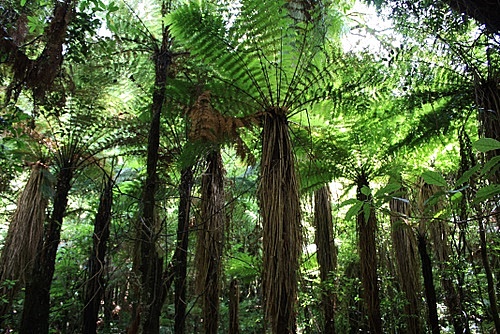
New Zealand had the advantage of being the last landmass on Earth to be discovered, so there was much less time for deforestation to occur before the world became aware of conservation. These forests are home to many unique animal and insect species.
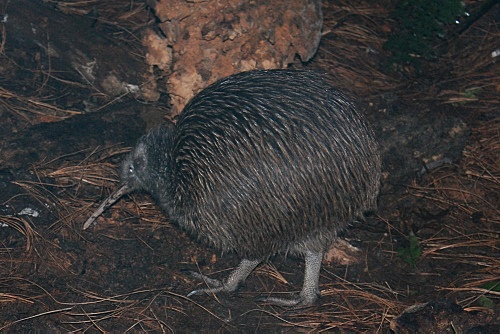
The fauna of New Zealand adapted independently giving rise to numerous flightless birds of which the most famous example is the still existing Kiwi. The now extinct Moa was a more impressive bird and died out somewhere in the 18th or early 19th century. Two species of moa were the tallest birds in the world. With necks outstretched they reached as high as 3.6 metres. These birds were a main food source for the original inhabitants, but the birds couldn't reproduce quick enough to sustain their population. When the Moa became extinct the Haast Eagle followed. This eagle was the largest and most deadly aerial predator the world has ever known. They attacked and ate Moa and probably made fair game of the first humans too.
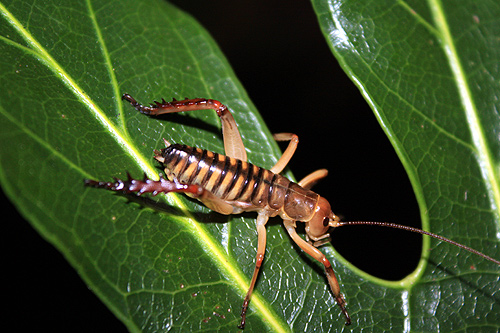
New Zealand has more than unusual birds. The heaviest insect in the world still exists in New Zealand. Called 'weta', they are frightening in appearance, but are relatively halmless. These creatures are ancient and existed even before dinosaurs. Another amazing creature is the tuatara. They are a unique species of reptile and the only existent species of its order remaining today. They are so ancient, that the creatures have body parts that baffle scientists as to their function.
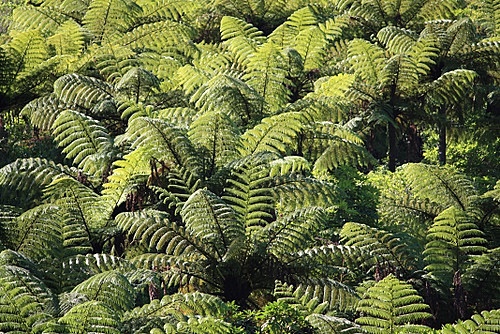
New Zealand fauna lived in one of the world's most biodiverse areas for flora. Forests are lush with a myriad of fern species from ground ferns to the highest fern tree in the world, the Black Fern. The most distant Palm tree from the tropics is the Nikau Palm of New Zealand. It grows as far south as the 43° latitude in the temperate zone. It is the world's only non-tropical palm. The Giant Kauri in the north of New Zealand has more volume of wood than any tree in the world.
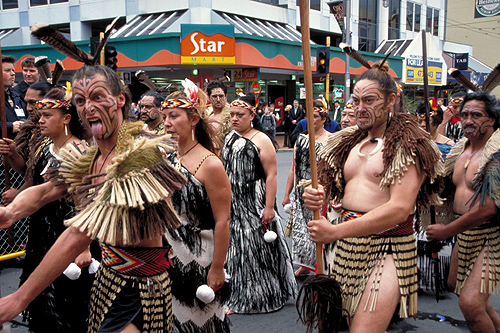
Human occupation took place somewhere between 950 and 1130 AD. Polynesians were the first to settle these islands. Named ' Maori' they were known for their navigational skills with their migration to New Zealand being recognised as one of the greatest maritime feats in human history. These Polynesians named the islands of New Zealand, 'Aotearoa', which means 'land of the long white cloud'.
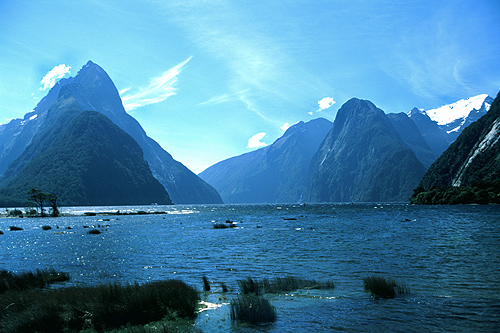
The Dutch were the first known Europeans to visit New Zealand. Abel Janszoon Tasman sighted the country in 1633. In 1642, Tasman was on a mission to discover a southern continent that was thought to stretch across the South Pacific. They eventually discovered the western coastline of Australia and part of coasts in both the North and South islands. Tasman described New Zealand as a "large land, uplifted high". He named it 'Staten Landt'.
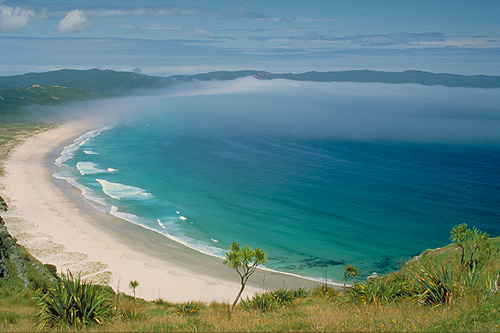
How New Zealand got its name is not known. The name can be traced back as far as Captain Willem Jansz, a Dutch navigator who in 1620, sailed the south seas in search of gold and other riches. During his voyage, he observed an island off the coast of New Guinea, which he named 'Nieu Zelandt'. Maps as early as 1645 have the name 'Zeelandia Nova' ('new sea land' in Dutch). It is thought that the title might have been given later on to New Zealand because it was a new land surrounded by sea.
Other historians think the land was named after the Dutch province of Zeelandt which was separated by sea from Hollandia. Likewise, Australia was called Hollandia Nova (New Holland) and across the sea was Zeelandia Nova (New Zeeland). Another opinion suggest that New Zealand was named after The Zeeland Chamber an important chamber of the Dutch East India Company. All seem like viable theories, but none have been proven.
Author & photographer: David Johnson (Virtual New Zealand). Providing a credit or link is appreciated.
Our content: logos, site names, text, photos, and website design are protected by international copyright law.
Original versions of our photos can be purchased / licensed & web versions can be shared subject to conditions.